
Final year, placement season, and I'm sitting there with an empty Word file. Name, phone number, and then nothing. No job, no internship, not even a part-time thing I could stretch into something relevant. I think I changed the font four times just to feel like I was making progress.
What I didn't know back then is that the people reading fresher resumes already know you have no experience. Nobody expects a fresher to have run a team. They're looking for something much simpler: some sign that you can learn, that you finish things, and that you've done at least one thing outside class. Most freshers have, they just don't count it.
What counts as experience (more than you think)
A college project counts. So does a fest you helped organise, a friend's shop whose logo you designed for free, a short course where you actually built something, even a weekend job at a store. The only rule is that you should be able to explain what you did without making it up. If someone asks "tell me about this" and you can talk for two minutes, it belongs on the page.
| What you've done | Why it's worth listing |
|---|---|
| Final-year or college project | It's real work. Treat it like a job entry |
| Internship, even two weeks | Shows you've been inside a workplace |
| Organising a fest or event | Planning, teamwork, handling people |
| Online course with a finished project | Proves you can learn without being forced |
| Part-time or weekend work | Responsibility and talking to customers |
| Freelance or favour work for friends | Real client, real deadline |
| NSS, clubs, volunteering | Initiative and leadership |
| Blog, GitHub, portfolio, YouTube | Self-driven work recruiters actually like |
How I'd lay it out
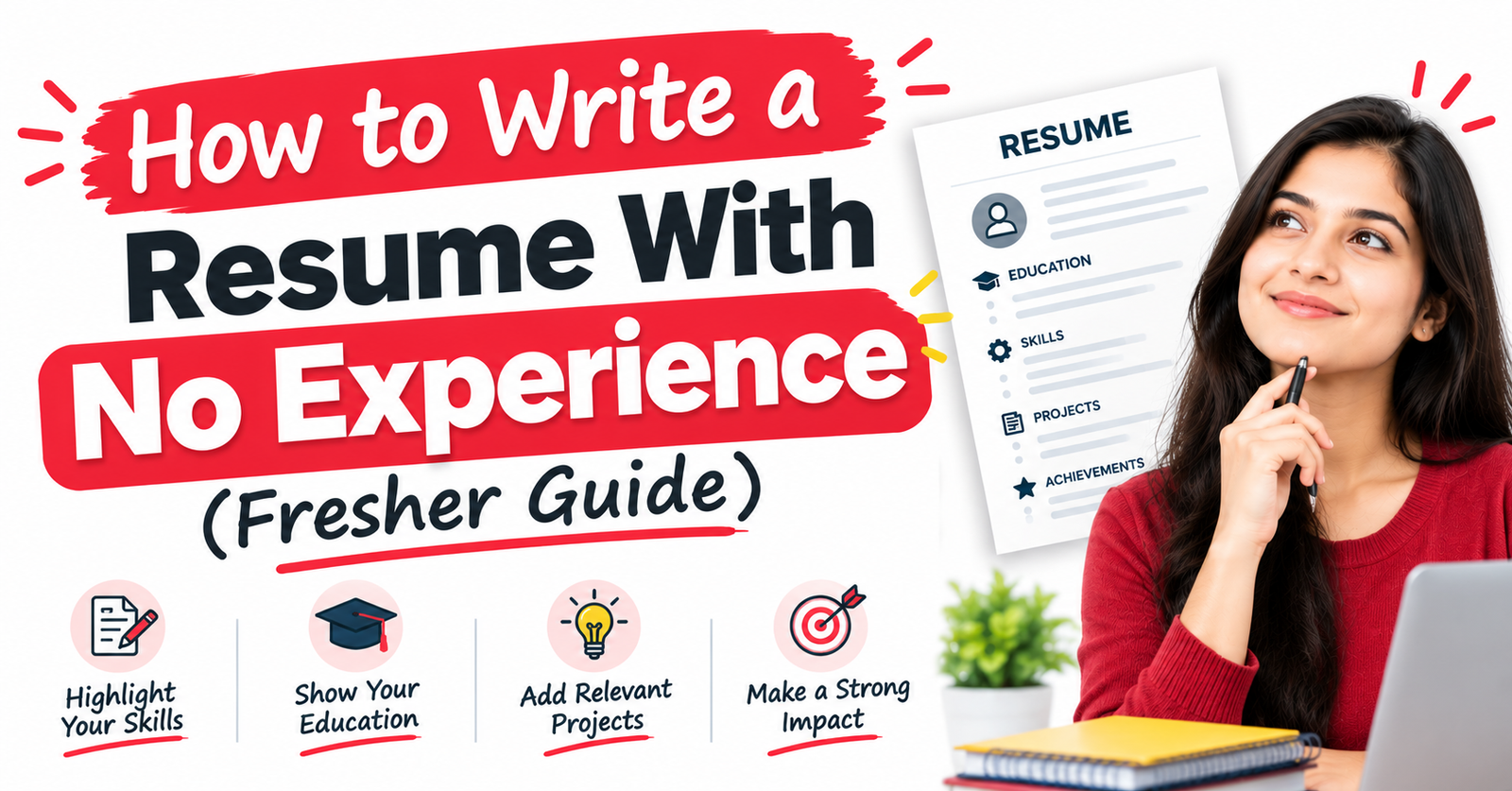
Experienced people start with their jobs. You flip that. Put your strongest material at the top, which for a fresher usually means education first and projects right after. Here's the order I'd follow, but you can shuffle a bit if, say, your internship is stronger than your marks.
| Section | What goes in it |
|---|---|
| Header | Name, phone, a sensible email, city, LinkedIn or portfolio link |
| Objective | Two or three specific lines about the role you want |
| Education | Degree, college, year, CGPA if it's decent |
| Projects | Two to four, each with what you built and the tools |
| Internship or work | Anything at all, short or unpaid is fine |
| Skills | Only what you can discuss in an interview |
| Certifications and extras | Relevant courses, clubs, awards |
And it's one page. Not "one and a bit." If it spills over, you've put in too much, and the second page won't get read anyway.
The small stuff at the top
Use a phone number you actually pick up and an email that looks like it belongs to an adult. rahul.sharma@gmail.com is fine, cutiepie_rahul99 is not (I've seen worse). Add your city, and a link to LinkedIn or a portfolio if you have one. Leave out the photo, date of birth and father's name unless the form asks for them. That's biodata territory.
For the objective, skip the old "seeking a challenging role in a reputed organisation" line. Say who you are, what you're good at and which job you want, in plain words. Something like: "Computer Science graduate with two Java projects and basic SQL, looking for a junior developer role where I can write real code and learn from people who've done it for years."
Education and projects, where the page is won
Your degree is your main credential right now, so it goes high up with the course, college, year and marks. If your CGPA isn't great you can leave it off and let the projects speak, though a few companies filter by it, so check the posting first. If you've done relevant subjects, like Data Structures or Financial Accounting, one line mentioning them is useful.
Projects are where most freshers waste the chance. They write a title and stop. "Library Management System." And that's all the recruiter gets. What does it do? What did you use? What was your part of it? Even small numbers help.
| Usually written | Better |
|---|---|
| Library Management System | Built a library system in Java and MySQL that tracks 500+ books and member records and replaced the register the college was using |
| Made a website | Built a 5-page site for a local tailoring shop with HTML, CSS and JavaScript. It got the shop its first online enquiries |
| Did market research | Surveyed 120 customers for a class project and used Excel to suggest two menu changes to a nearby cafe |
| Helped in college fest | Led a 12-person volunteer team for the annual fest and coordinated stalls for about 800 visitors |
If you don't remember the exact number, give an honest estimate. "Around 100 users" is fine. Just don't invent a figure you can't defend, because the interviewer will ask.
Skills: fewer, and real ones
A long skills list looks impressive for about three seconds. Then somebody asks about item number six and you go quiet. List only what you could talk about, and group them so it's easy to scan: technical skills, tools, languages. Teamwork and communication are fine in small doses, but they land better when a project shows them than when they just sit in a list. And skip the rating bars. Nobody knows what "80% in Python" means, you included.
If you really have nothing yet
It happens. Maybe you're a few months from graduating and haven't done anything outside lectures. That's fixable, and not in a long, dramatic way. Finish one short online course in your field (finish it, a completed one beats five half-done ones). Build one small thing and put it online: a basic website, a spreadsheet analysis, a set of designs, a few sample articles. Offer to help a local shop or a friend's small business for free, and write down what you did. Join a college club and take a small role.
A month of focused effort can give you two or three real lines for the page. That's usually the gap between an empty resume and a believable one.
Change a little for each job
Read the job posting and notice the words it keeps repeating, like "data analysis" or "customer handling" or "Python." If you truly have those skills, use the same words. It helps with ATS software, and it tells the person reading that you actually looked at the posting. You don't need to rewrite everything. Adjust the objective, reorder the skills and move the most relevant project to the top.
Formatting, which should be boring
| Do | Skip |
|---|---|
| One font, Arial or Calibri, size 10 to 12 | Three fonts and coloured text |
| Short bullet points, even spacing | Dense paragraphs |
| Plain headings like Education, Projects | Cute ones like "My Journey" |
| A PDF named Firstname_Lastname_Resume.pdf | resume_final_v3_new.pdf |
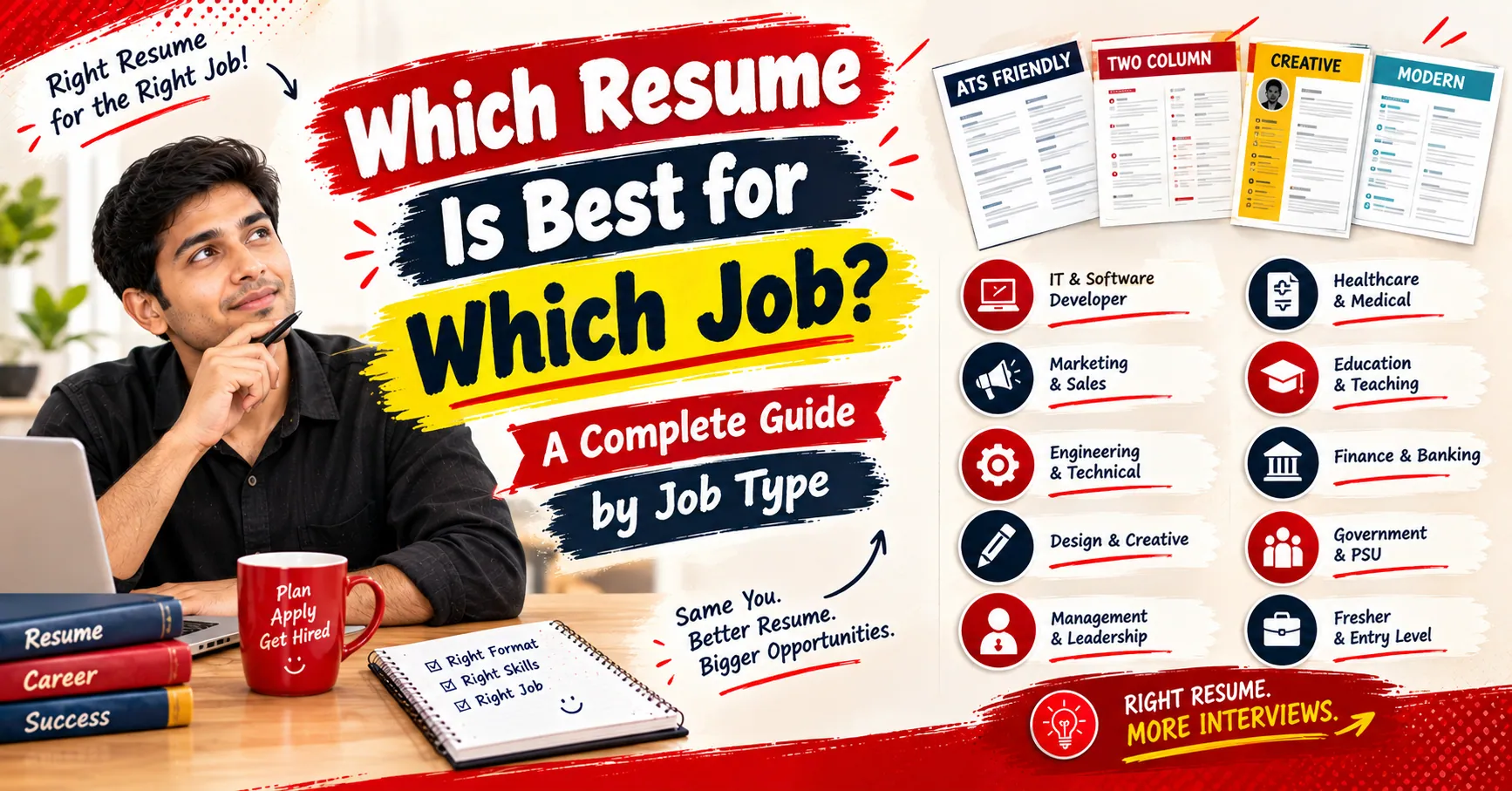
| Single column, no text boxes | Fancy templates that confuse ATS software |
Things I keep seeing
Two-page resumes from people with no job history. Every school award since class 8. An objective that says nothing. Skills the person can't explain. Typos, way more than you'd guess. The same resume sent to every company. A photo, religion or marital status on there when nobody asked.
Last checks
Read it out loud once, because your ears catch mistakes your eyes skip. Show it to a senior or a friend who works in the field. And open the PDF on your phone before you send it, since plenty of recruiters will see it on a small screen first, and layouts that look fine on a laptop can fall apart there.
A fresher resume isn't about hiding what you lack. It's about showing, clearly and honestly, what you've already done and what you're ready to do next. A lot of people who get hired early weren't the ones with the biggest history, they were the ones who made their potential easy to see.
Writing your first resume right now? Tell me your field in the comments and I'll suggest what to put under projects.
Comments
No comments yet. Be the first to comment.