
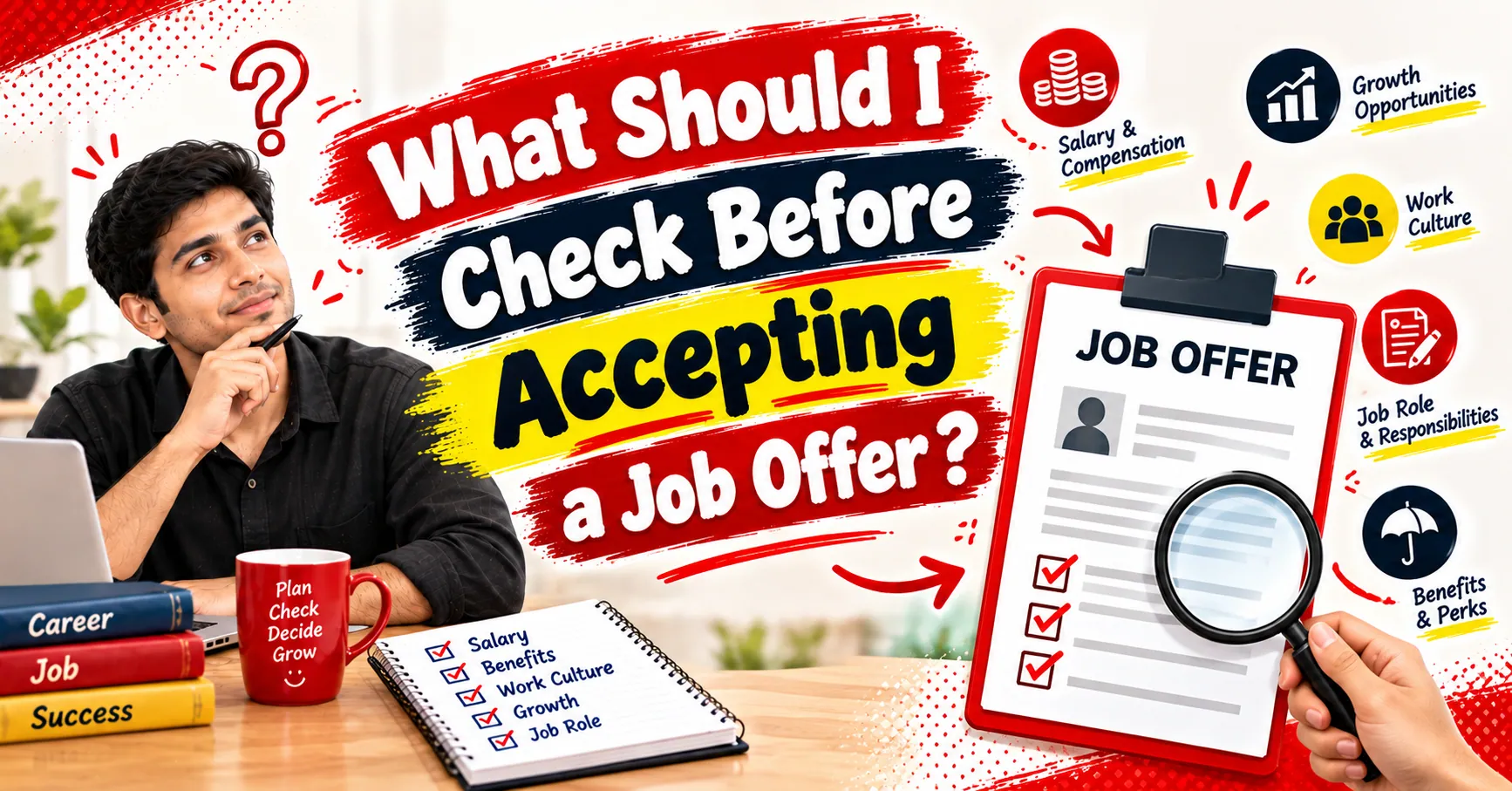
A cousin of mine got an offer letter two years ago and was so relieved that he signed it the same evening. Big company name, a CTC number that looked great on paper, a joining date three weeks out. It was only after his first salary landed that he sat there with a calculator, confused, because the amount in his account was nowhere near what he'd been telling everyone at home. Nobody had lied to him. He just never asked the right questions before saying yes.
That's really what this post is about. Getting an offer feels like crossing a finish line, and in that rush it's easy to skip the boring checking part. But the offer is the one moment when you have the most leverage you'll ever have with that company. After you join, a lot of things get harder to change. So take a day, or even two, and go through the list below properly.
Start with the money, but look at the right number
The CTC (cost to company) figure is the number everyone quotes, and it's also the least useful one for planning your life. What you actually live on is the in-hand salary, and the gap between the two can be big.
| Item in the offer | What to ask or check |
|---|---|
| Fixed salary | The guaranteed part. How much of the CTC is this really? |
| Variable pay / bonus | Is it guaranteed or performance-linked? What percentage usually gets paid out? |
| PF (provident fund) | Is the employer's share inside your CTC, or on top of it? |
| Gratuity | Usually counted in CTC but paid only after five years, so don't treat it as monthly money |
| Insurance | Often shown as a benefit in CTC, but you never see it as cash |
| Joining or retention bonus | Is there a clause to return it if you leave early? |
| Reimbursements, allowances | Are they taxable? Do you need to submit bills? |
Ask HR for a salary breakup sheet if it isn't attached. A decent company won't mind. If they get vague or annoyed about a simple breakup, that tells you something too.
Read the actual job role, not just the title
Titles are slippery. "Senior Executive" at one company is "Associate" at another, and a "Manager" title sometimes comes with no team and no authority. What matters is the work.
Ask what a normal week looks like. Who will you report to? What will you be expected to deliver in your first three or six months? Is this a new position or are you replacing someone, and if it's a replacement, why did that person leave? Some of these questions feel awkward to ask. Ask them anyway, politely. A good manager will give you a straight answer, and a bad one will give you a nervous laugh.
Also compare the offer's role description with the original job posting and with what the recruiter told you on the phone. If the three don't match, clear that up before you sign.
Notice period, probation and the exit terms
Nobody reads this part when they're excited. Everybody regrets it later when they want to leave.
| Clause | Why it matters |
|---|---|
| Probation period | How long is it, and is the notice period shorter during probation? Is confirmation automatic or does it need a review? |
| Notice period | 30, 60 or 90 days changes how fast you can move to your next job. Check if it can be bought out and at what cost |
| Service bond / minimum stay | If you leave early, do you owe money? How much, and does it reduce over time? |
| Training cost recovery | Some companies charge back training costs if you resign within a year or two |
| Termination terms | What notice or severance applies if the company ends the contract? |
| Non-compete / non-solicit | Can it stop you from joining a competitor or a client later? |
If there's a bond, read it twice. Some are reasonable, a lot are not, and a few may not even hold up if challenged. Still, you don't want to find that out the hard way, so if something looks heavy, ask for it to be reduced or removed before you accept.
Work hours, location and flexibility
This is where offers quietly differ the most. Two jobs with the same salary can have completely different lives attached.
- What are the official working hours, and what do people actually work? These are often two different things.
- Is it work from office, hybrid or remote? Is that in writing, or just a verbal promise that could change in six months?
- Are there rotational or night shifts, weekend work, or on-call duty?
- How long will your daily commute be? A good salary can feel a lot smaller after two hours of travel every day.
- If relocation is involved, who pays for it, and is there a clause to repay if you leave?
Leave, holidays and the other benefits
Look at how many paid leaves you get, whether unused leave carries forward or can be encashed, and whether sick leave is separate. Check the health insurance too: is it just for you, or does it cover your spouse, kids and parents, and what's the actual coverage amount? Things like a gym allowance or a learning budget are nice extras, but don't let them distract you from the big items above.
Growth: where does this job go?
A job that pays well today but leads nowhere can quietly stall your career. Ask how performance is reviewed, how often, and what the typical promotion path looks like. If you can, ask how long people in your role usually stay before moving up. And check whether there's real learning on offer, such as training, mentorship and exposure to bigger projects, or whether you'll be doing the same task on repeat for two years.
Check the company itself
You've been focused on the offer, but the company behind it matters just as much. Spend an evening on this.
| What to look at | Where to look |
|---|---|
| Employee reviews | Glassdoor, AmbitionBox, Reddit threads (read the average ones, not just the best and worst) |
| Company health | Recent news, funding, layoffs, client losses |
| Salary on time or not | Reviews often mention delayed salaries, which is a big warning sign |
| Real employees | Message someone on LinkedIn who works there, or used to, and ask honestly about the culture |
| Legal status | Is the company registered, with a real office and a proper website? |
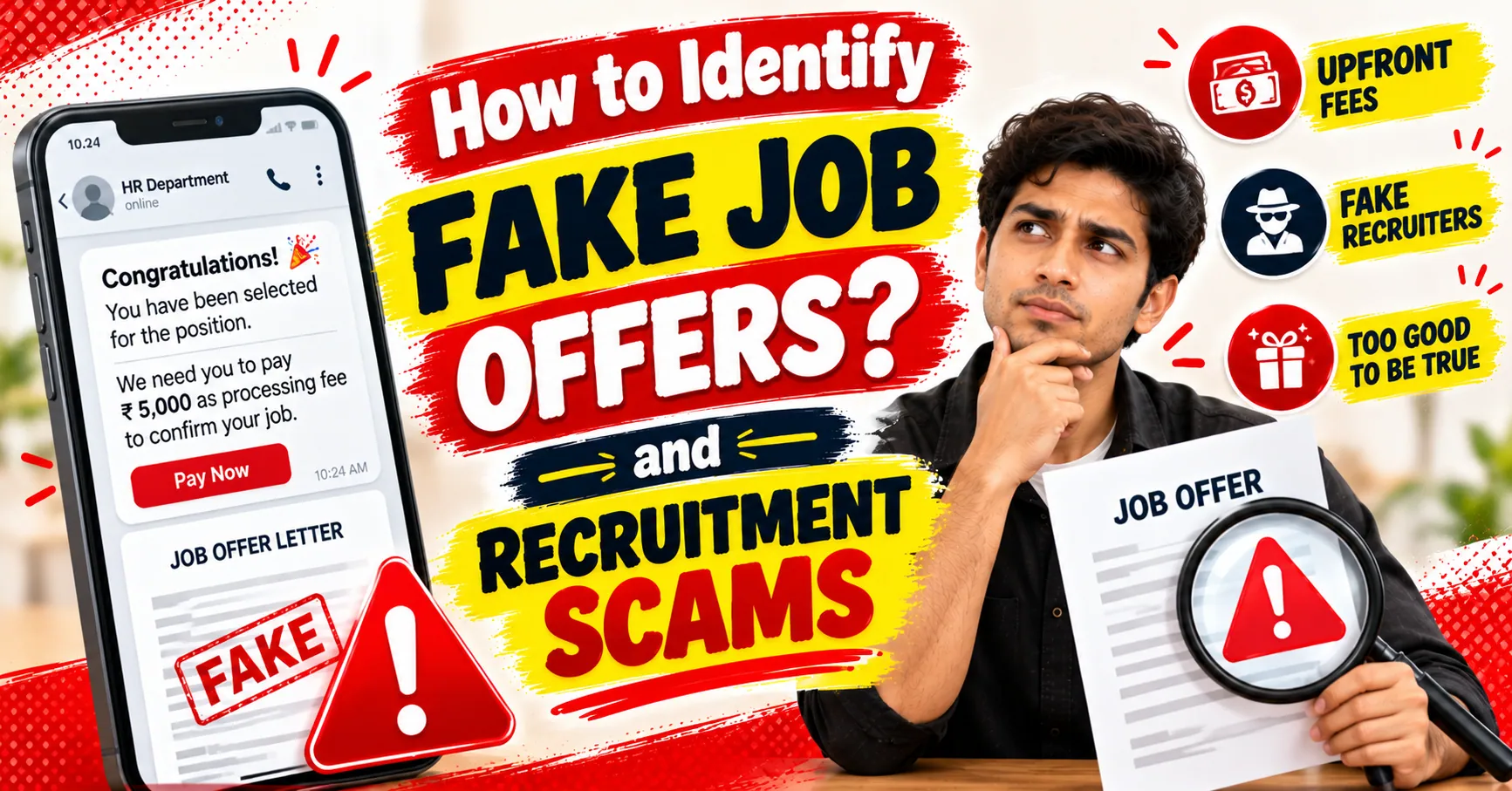
And please, be careful with fake offers. If a company asks you to pay money for a "registration fee," "training kit" or "security deposit" before joining, walk away. Real employers don't charge you to give you a job. Check that the email comes from the company's official domain and not a free Gmail or Yahoo address.
Make sure the offer letter has everything in writing
Verbal promises are worth very little once you've joined. If the recruiter told you about a salary review after six months, a hybrid arrangement, or a specific team, ask for it to be added to the offer letter or an email. People tend to hesitate here because it feels pushy. It isn't. It's normal.
At the very least, your final letter should clearly state:
- Your job title and department
- Your joining date and work location
- The full salary structure
- Probation, notice period and any bond terms
- Reporting manager, if known
- The documents you need to submit before joining
Is it okay to negotiate?
Yes. Most companies expect at least a little of it, and a polite request almost never gets an offer withdrawn. You can negotiate more than just salary: joining date, notice period buyout, work-from-home days, a review after six months, a learning budget, the designation. Know your market range first, ask clearly, and give a reason, like your skills, your current pay or what other offers look like. If the answer is no, you've lost nothing by asking.
Don't resign from your current job too early
Wait until you have the final signed offer letter, the background verification is clear, and you're sure about the joining date. Offers do get delayed or withdrawn sometimes, and being unemployed because you quit on a promise is a terrible position to be in. Do your resignation only after everything is confirmed in writing.
A quick checklist before you say yes
- I know my in-hand salary, not just the CTC
- I understand which parts of the pay are fixed and which aren't
- The role matches what I was told in the interviews
- I've read the notice period, probation and bond clauses
- Work hours, location and flexibility are written down
- I've checked reviews and talked to at least one person who knows the company
- Every promise made to me is in the offer letter
- I haven't paid, and haven't been asked to pay, any money to get this job
The short version
A job offer isn't just a salary number, it's a package of money, time, people, growth and risk. Most of the problems people run into later were visible in the offer letter or in a conversation they didn't have. Spend a little time on the dull questions now and you'll save yourself a lot of regret later.
And if you do all this homework and the offer still feels right, then sign it with a clear head and enjoy it.
Has a job offer ever turned out different from what you were promised? Tell me what happened in the comments, someone reading might avoid the same mistake.


Comments
No comments yet. Be the first to comment.