

When a company makes you an offer, there is usually a short moment where they mention the number and wait to see what you say. A lot of people say "okay, that's fine" because they have no idea what else to say. Later they find out the number could have been a little higher if they had asked.
Negotiating does not need to be aggressive or awkward. It needs a bit of research and one or two sentences you have already thought about. This guide covers both, along with how much to ask for, what else you can negotiate apart from the base pay, and the cases where it is fine not to negotiate at all.
Is it okay to negotiate at all?
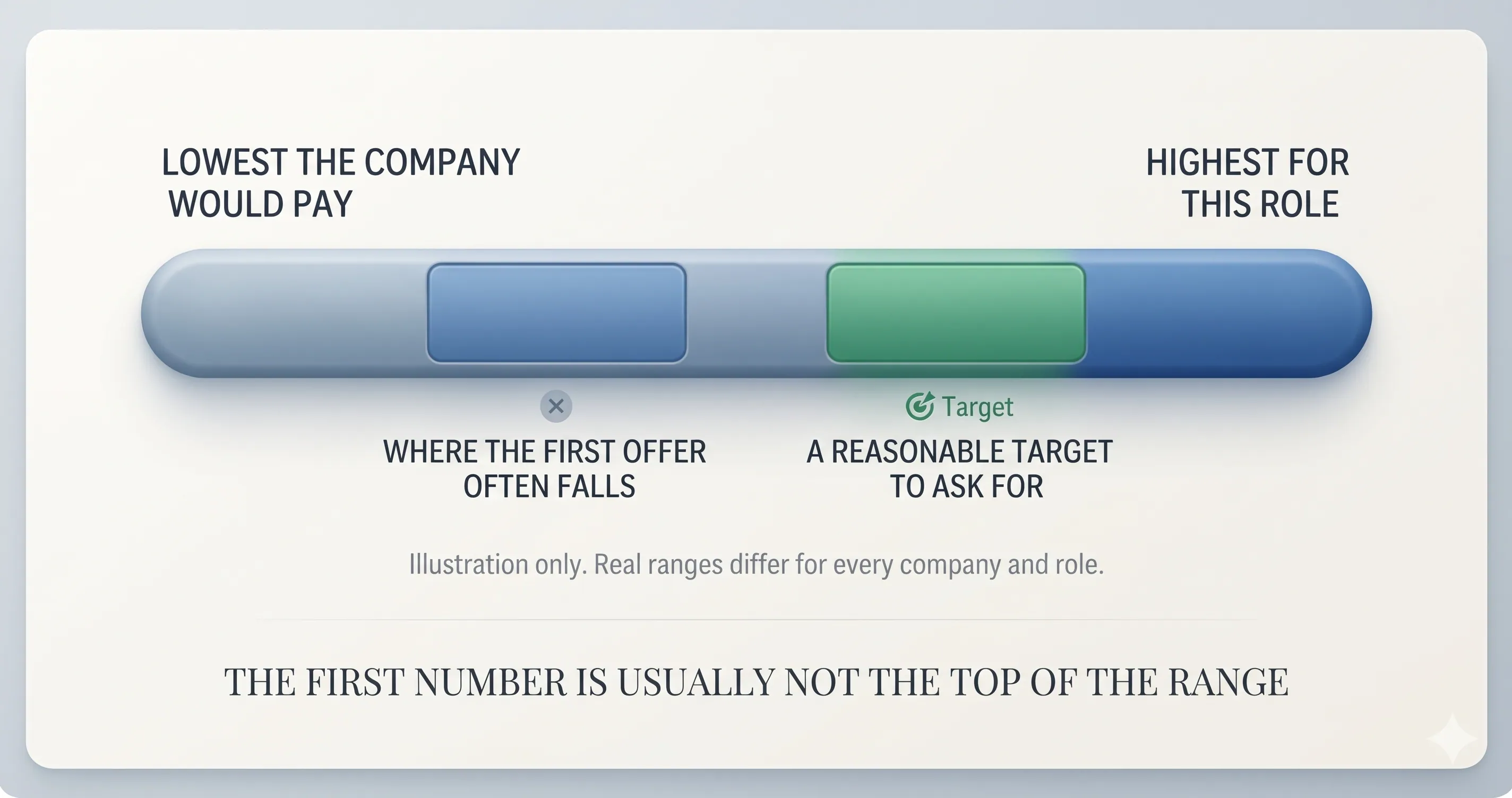
In most private companies, yes. When HR makes an offer, they usually have a range in mind for the role, not one fixed number. The first figure they say is often somewhere in the lower or middle part of that range. That is just how budgets work. It does not mean they are trying to cheat you.
There are exceptions. Government jobs and many campus placements have fixed pay scales. Some internships and very junior roles also have a standard package for everyone. In those cases there is nothing to negotiate, and asking can sound strange. Outside of those, a polite question is normal and most hiring managers expect it.
Do your research first
Walking in with real numbers changes the whole conversation. You are no longer saying "please give me more". You are saying "this is what the role usually pays, and this is where I fit".
- Look up the exact role and city. A sales executive in a metro city and one in a smaller town can have very different pay.
- Compare two or three similar companies. Sites like Glassdoor, AmbitionBox and LinkedIn salary insights give a rough idea. Treat the numbers as a guide, since they come from self-reported data and can be old.
- List what you bring. Years of experience, tools you know well, certificates, and a competing offer if you really have one.
- Decide your minimum before the call. Do it quietly at home, so you are not working it out under pressure while someone waits on the line.
- Understand the structure. In India, offers are often given as CTC. Find out how much is fixed, how much is variable, and what your monthly in-hand pay will be after deductions. Two offers with the same CTC can feel very different at the end of the month.
What to actually say
You do not need a speech. A short, calm version works better than a long one.
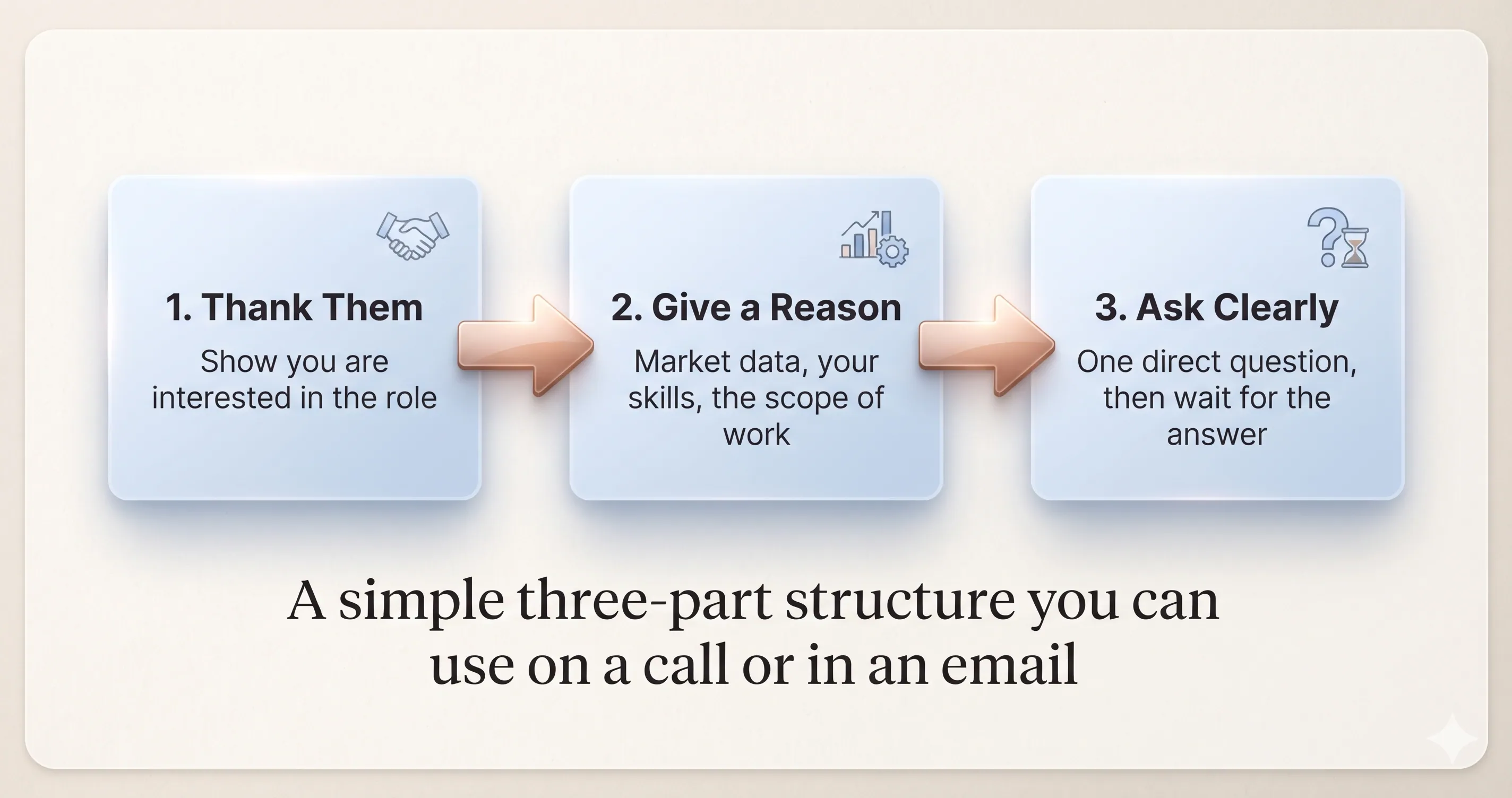
"Thank you for the offer. I am excited about this role. Based on my research and the responsibilities we discussed, I was hoping for something closer to [number]. Is there any flexibility on that?"
It does three things. It says thanks, it gives a reason, and it asks one clear question. Many people leave out the reason, which makes the request sound random. Others apologise so much that it sounds like they do not believe in their own number. Keep it steady and stop talking after the question. A pause is fine.
If they ask for your current salary
This question comes up often in India. You can answer with what you are looking for instead, for example "I am looking for something in the range of X to Y for this role". If you do share your current pay, tell the truth. Companies can check through payslips, bank statements or Form 16, and a lie can cost you the job even after you have joined.
How much should you ask for?
There is no single right number. The table below is a rough guide, and it changes with the industry, the city and how much the company needs the role filled.
| Situation | Approach |
|---|---|
| First job, no experience | Ask for a small increase, maybe 5 to 10 percent, or none if the package is fixed. Learning, mentoring and a clear role often matter more at this stage. |
| Changing jobs with 2 to 4 years of experience | Use your current pay and market data together. A jump of 15 to 25 percent is a common target in many fields, but it depends on the industry. |
| You have another offer | Mention it plainly and without threats. For example: "I have another offer at X, but I would prefer to join here if we can get closer to that number." |
| Raise or promotion at your current company | Bring proof of what you have done and the extra work you took on. Years in the company alone are a weak reason. |
Asking for 10 to 12 percent more with a clear reason is received very differently from asking for 40 percent more with nothing behind it. The first looks like a normal conversation. The second looks like a guess.
It is not only the base number
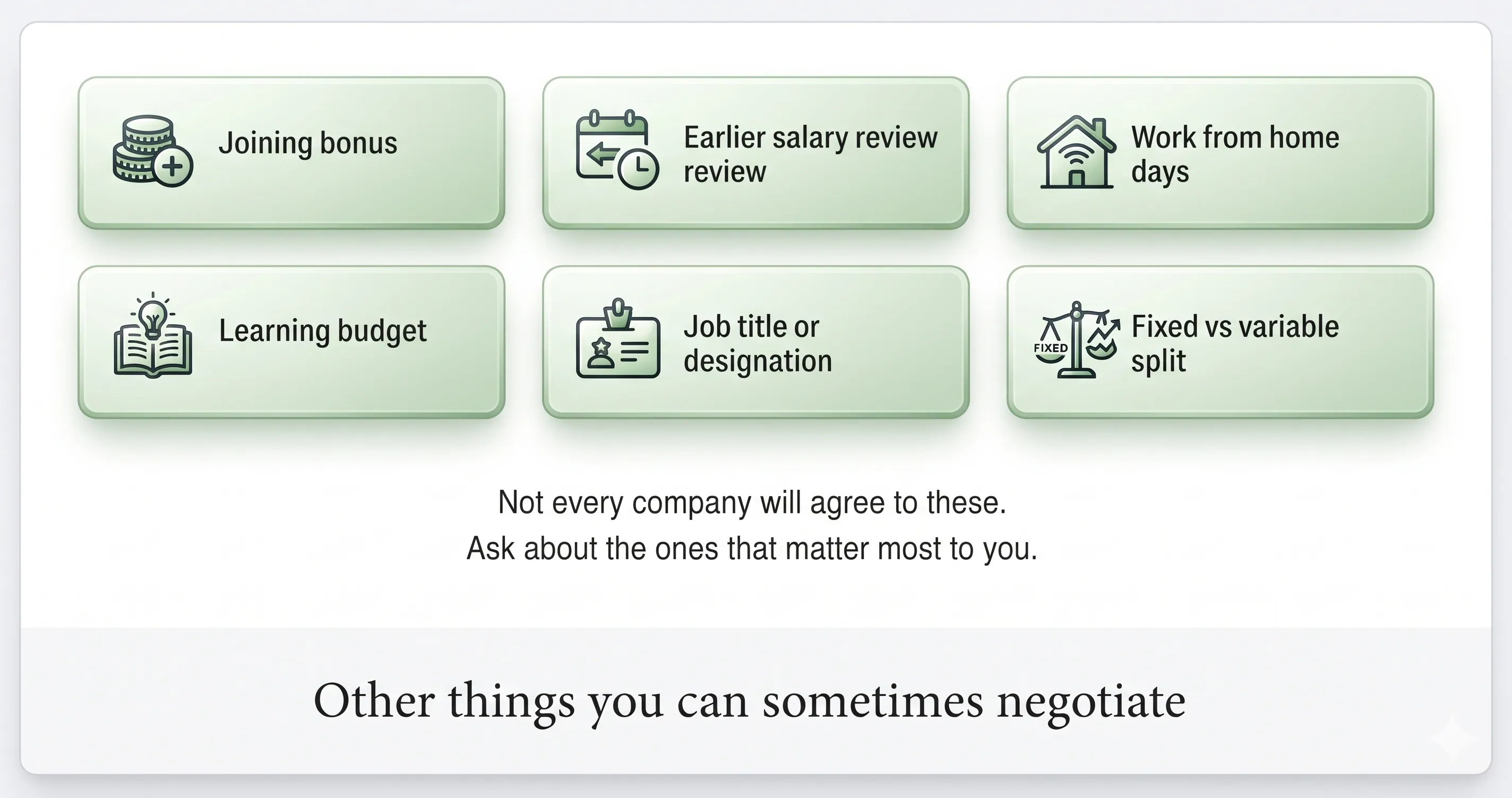
If the company says the base pay cannot move, there may still be other things you can ask about. Depending on the company, these can include a joining bonus, work from home days, an earlier salary review, a learning budget, a different designation, or a better split between fixed and variable pay. A formal review after six months instead of twelve is something many companies agree to more easily than a higher base.
Mistakes to avoid
- Saying yes on the call before you have seen the offer in writing
- Making up a current salary or a competing offer that does not exist
- Giving ultimatums like "give me this or I walk"
- Asking for a big number without any reason behind it
- Bringing up salary in the first round, before the company has shown interest in you
- Focusing only on the base pay and ignoring variable pay, notice period terms and probation rules
- Trying to negotiate after you have already signed
When it is fine to accept the first number
You do not have to negotiate every time. If the offer already matches or beats what your research showed, accept it with a clear conscience. The same goes for fixed-pay roles, entry-level internships, or situations where you need to join quickly and a few extra percent is not worth the delay. Negotiation is a tool to use when it makes sense. It is not a duty.
After you agree
Ask for the final terms in the offer letter and read it properly before signing. Check that the CTC breakup, joining date, notice period, probation period and variable pay match what was discussed. If anything was agreed on a call, such as an early review or a joining bonus, make sure it is written down. Verbal promises are easy to forget later.
Frequently asked questions
Can a company withdraw an offer if I negotiate?
It is rare when you are polite and your request is reasonable. It is not impossible, though, and there is no guarantee. This is another reason to avoid ultimatums and to know your own minimum before you start.
Should I negotiate over the phone or by email?
Either works. A phone call lets you hear their tone and respond quickly. Email gives you time to think and leaves a written record. Many people discuss it on a call and then confirm the final numbers by email.
Can a fresher negotiate?
Yes, if the company does not have a fixed package for freshers. Keep the ask small and give a reason, such as a relevant internship, a project or a skill the role needs. If the pay is fixed, ask about learning opportunities or an early review instead.
What if they say no?
Stay polite and ask whether anything else can be adjusted, like a review date or work from home. Then decide if the offer works for you as it is. Staying calm leaves the door open for future roles at the same company.
Should I mention another offer if I do not have one?
No. It is dishonest, and if the company asks for details you will have nothing to show. Use market research and your own skills as your reasons instead.
To sum up
Good salary talks rarely involve a fight. Find out what the role normally pays, know your minimum, ask one clear question with a reason behind it, and get the final terms in writing. If the first offer is already fair, take it and move on.





Comments
No comments yet. Be the first to comment.