
Handing in a resignation takes five minutes. Getting out cleanly takes a bit longer than that.
The letter is the easy part. The trouble starts later. You find out the notice period is 90 days and not 30. The relieving letter doesn't turn up for weeks. Your manager, who was friendly last month, goes cold when the new company calls for a reference. Almost all of this can be avoided if you do a few things in the right order, so that's what this post is about. It's general information, not legal advice, and your own appointment letter has the final say on the rules.
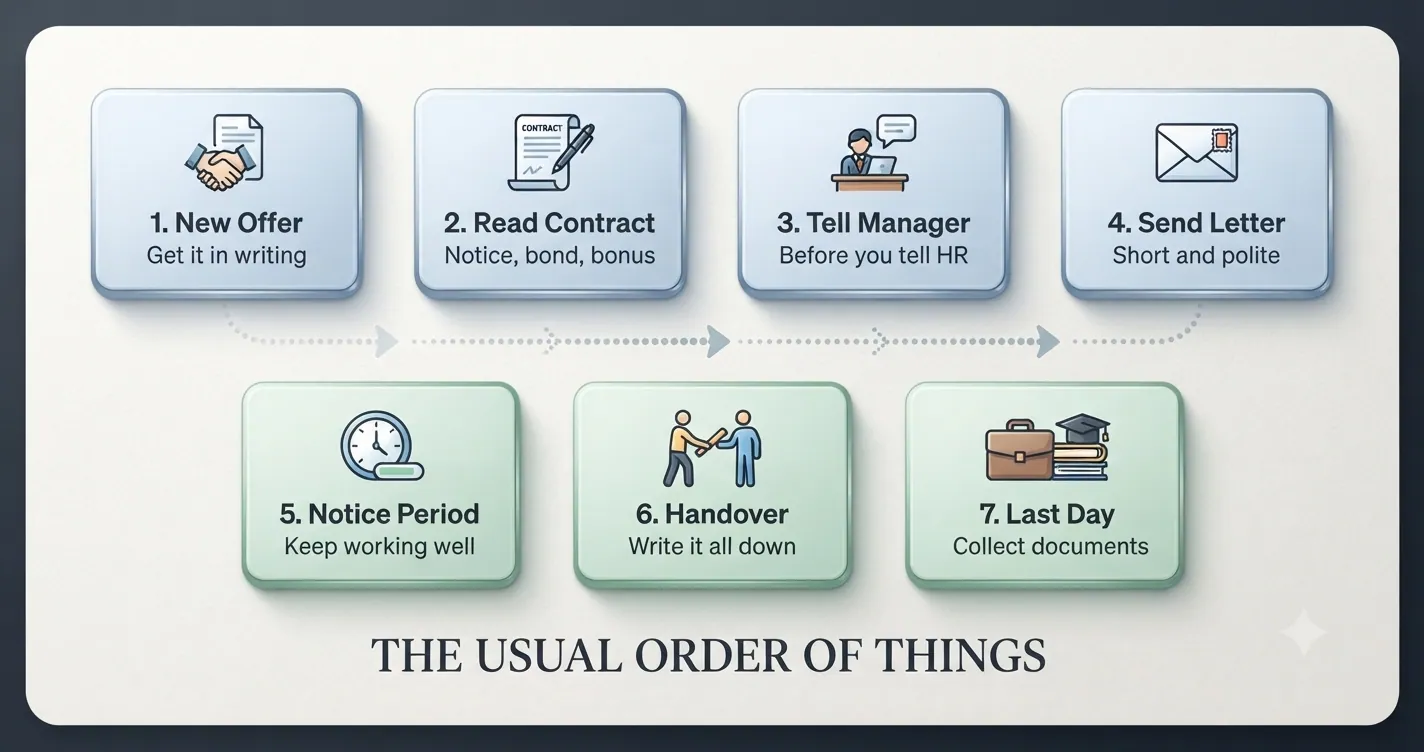
Get the new offer in writing first
Don't resign on the basis of a phone call. "We'll send the letter next week" means nothing until the letter is in your inbox. Offers get delayed. Background checks drag on. Now and then the role just disappears. If you've already resigned by then, you're stuck, with no leverage and a manager who now knows you're leaving.
Then read your appointment letter
All of it, including the boring clauses. You're looking for the notice period, whether a buyout is allowed, any service bond, any joining bonus you'd have to pay back, and a non-compete if there is one. Better to find a surprise now than in your last week.
Tell your manager first
Not HR, not your work friends. Your manager. In person or on a call, if you can.
"I wanted you to hear this from me first. I've decided to move on and I'll send in my resignation today. I'll make sure my work is handed over properly."
You don't need a long explanation. "I got an opportunity I want to take" is plenty. And this isn't the moment for a list of complaints. It won't change anything, and it's exactly what your manager will remember when somebody asks about you a year from now.
The letter
Short. That's the main thing. Your designation, your last working day, one polite line. You don't have to name the new company or give a reason.
Dear [Manager's name],
I'm resigning from my role as [designation]. My last day will be [date], which is when my [60-day] notice period ends.
I'll finish whatever is pending and write up a handover for the person who takes over. If HR needs anything else from me, just tell me.
Thank you for the time here. I learned a lot working with this team.
Regards,
[Your Name]
[Employee ID]
If the new company needs you earlier than your notice allows, put a line in the letter asking for it. Something like: "Because of my joining date at the new organisation, could my last working day be [date]? I'll complete the handover in that time and stay reachable afterwards. If it isn't possible, I understand." Don't make it sound like a demand.
Serve it, shorten it, or pay it off
Those are the three ways a notice period usually goes. Most people simply work through it. Some ask for early release, which is a request, so the company can say no. And some contracts allow a buyout, where you pay the company for the days you skip. Look at what yours says before you decide anything.
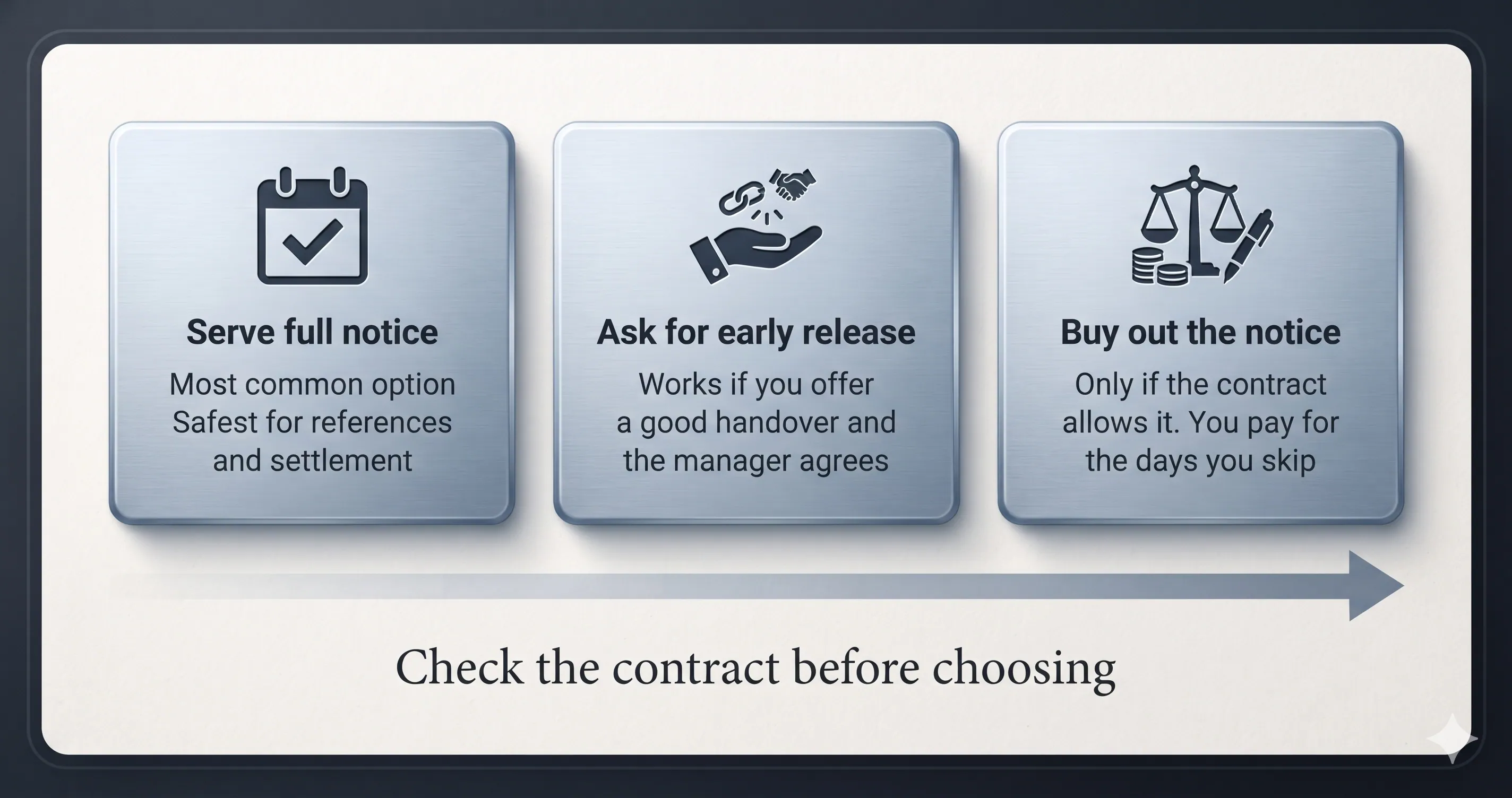
Whatever gets agreed, get it in writing. Even a two-line email will do. Verbal promises have a way of vanishing when the final settlement is being calculated.
If they make a counter-offer
It happens. Suddenly you're worth more money and a better title. Before you say yes, ask yourself why you wanted to leave in the first place. If the answer is pay, fine, maybe that fixes it. If the answer is the work, the manager, or no growth, then a bigger number won't change any of that, and you'll probably be back in the same spot in a year. Decide this before the conversation. It's harder to think clearly when your boss is sitting across from you asking you to stay.
Handover, even if you're annoyed
People forget most of what you did at work. They remember how you left.
So write the handover down. Open tasks, where the files are, who the contacts are, what's pending, what deadlines are coming. Then walk someone through it. If part of your work is tricky, record a short screen video, because that saves the team more trouble than any document.
One warning. Don't copy customer data, internal documents or code to your personal email or drive, however harmless it feels. Companies take that seriously and it can turn into a legal problem. Take your own contacts and your own certificates, and leave the rest.
If HR asks for an exit interview, be honest, but keep it calm. Real problems, like unclear targets or no training, are worth mentioning with an example. Personal attacks aren't. These notes go into a file, and files get passed around.
Your last day
Here's what to leave with, and what to hand back.
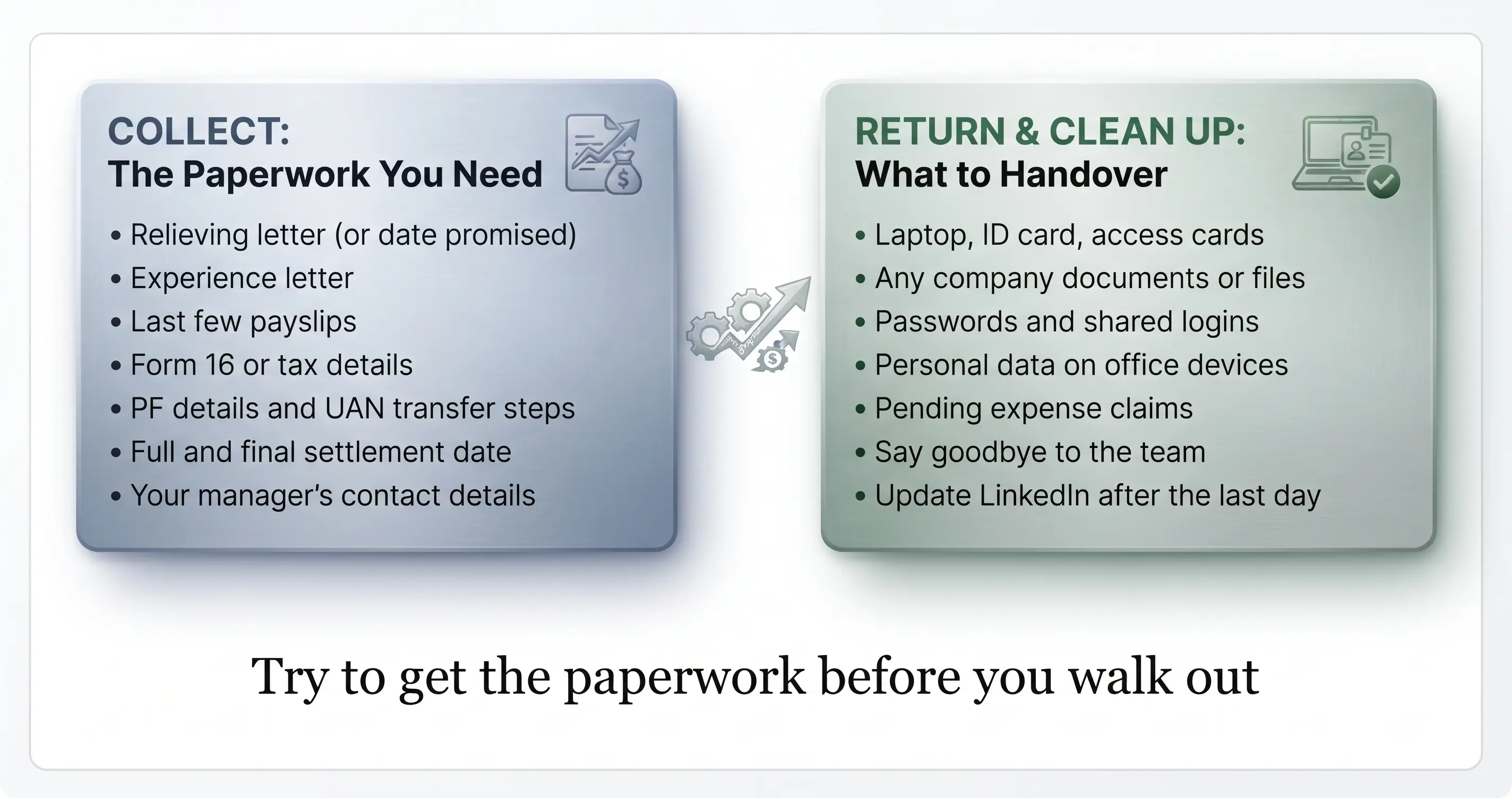
The full and final settlement (F&F) is your last salary plus any leave encashment and other dues, minus any deductions. Companies take different amounts of time to clear it. Ask HR for a date and keep their reply. Gratuity usually needs a certain number of years of continuous service, commonly five, but the rules vary in some cases, so confirm with HR and don't assume.
If the relieving letter is late and nobody gives you a reason, even though you served your notice and handed over, write to HR asking for a date. If that doesn't work, go to a senior HR person. Think about legal advice only if it keeps dragging on.
A couple of quick questions
Can you resign by email? Yes, most companies accept it. Send it to your manager and HR together and keep a copy. Can you take leave during notice? Depends on the company. Some don't allow it and some extend the notice by the days you take, so ask first.
And should you resign before you have another job? Usually no. The exception is when the job is hurting your health. Then look at your savings, plan the gap, and go.
That's about it. Don't badmouth the company online after you leave either. It's tempting, and it never helps.




Comments
No comments yet. Be the first to comment.